
102 lines
4.2 KiB
Markdown
102 lines
4.2 KiB
Markdown
# Docsy Jekyll Theme
|
|
|
|
[](https://circleci.com/gh/vsoch/docsy-jekyll/tree/master)
|
|
<a href="https://jekyll-themes.com/docsy-jekyll/">
|
|
<img src="https://img.shields.io/badge/featured%20on-JT-red.svg" height="20" alt="Jekyll Themes Shield" >
|
|
</a>
|
|
|
|
|
|
|
|
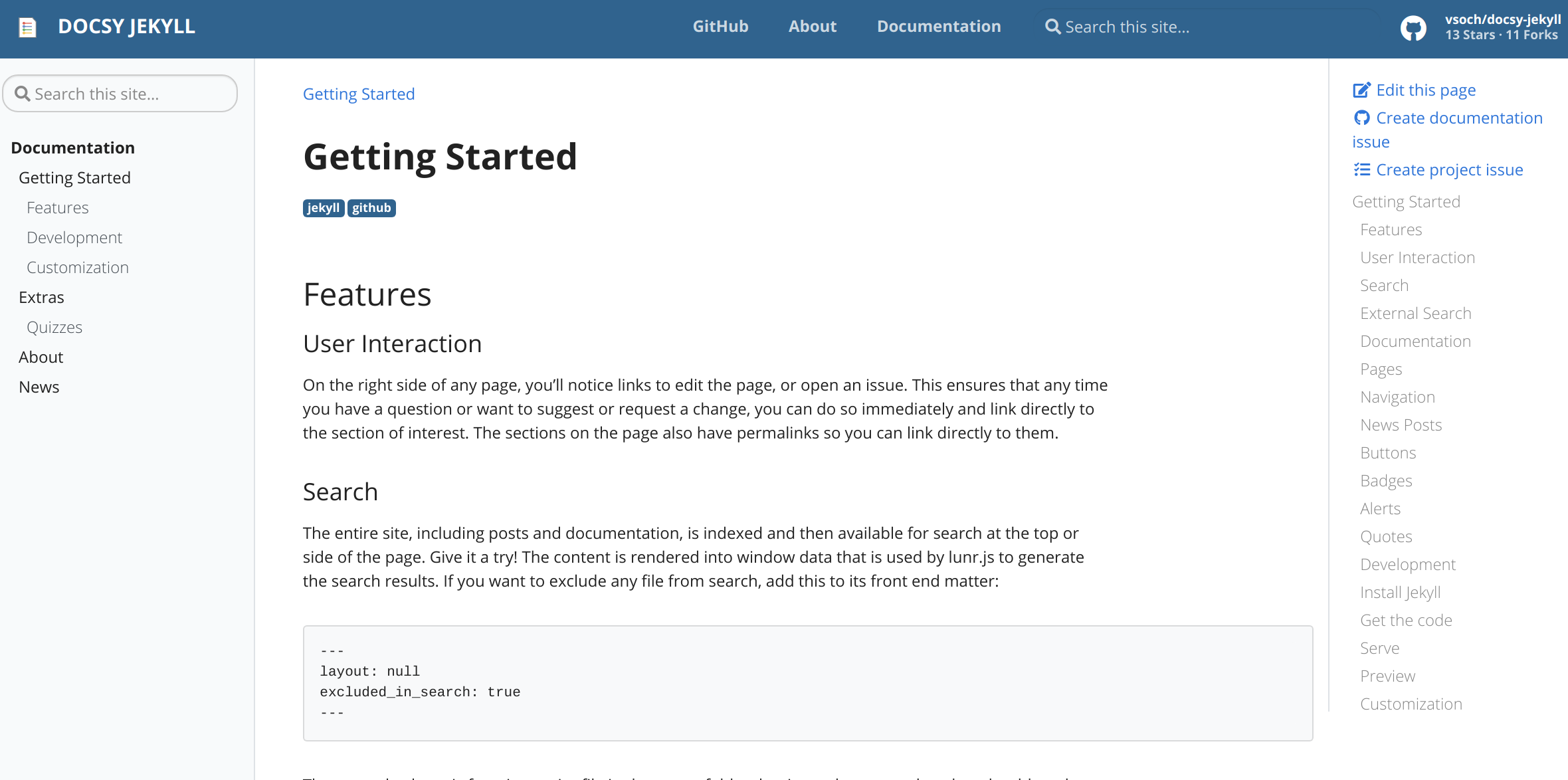
This is a [starter template](https://vsoch.github.com/docsy-jekyll/) for a Docsy jekyll theme, based
|
|
on the Beautiful [Docsy](https://github.com/google/docsy) that renders with Hugo. This version is intended for
|
|
native deployment on GitHub pages. The original [Apache License](https://github.com/vsoch/docsy-jekyll/blob/master/LICENSE) is included.
|
|
|
|
## Changes
|
|
|
|
The site is intended for purely documentation, so while the front page banner
|
|
is useful for business or similar, this author (@vsoch) preferred to have
|
|
the main site page go directly to the Documentation view. Posts
|
|
are still provided via a feed.
|
|
|
|
## Usage
|
|
|
|
### 1. Get the code
|
|
|
|
You can clone the repository right to where you want to host the docs:
|
|
|
|
```bash
|
|
git clone https://github.com/vsoch/docsy-jekyll.git docs
|
|
cd docs
|
|
```
|
|
|
|
### 2. Customize
|
|
|
|
To edit configuration values, customize the [_config.yml](https://github.com/vsoch/docsy-jekyll/blob/master/_config.yml).
|
|
To add pages, write them into the [pages](https://github.com/vsoch/docsy-jekyll/blob/master/pages) folder.
|
|
You define urls based on the `permalink` attribute in your pages,
|
|
and then add them to the navigation by adding to the content of [_data/toc.myl](https://github.com/vsoch/docsy-jekyll/blob/master/_data/toc.yml).
|
|
The top navigation is controlled by [_data/navigation.yml](https://github.com/vsoch/docsy-jekyll/blob/master/_data/navigation.yml)
|
|
|
|
### 3. Options
|
|
|
|
Most of the configuration values in the [_config.yml](https://github.com/vsoch/docsy-jekyll/blob/master/_config.yml) are self explanatory,
|
|
and for more details, see the [getting started page](https://vsoch.github.io/docsy-jekyll/docs/getting-started)
|
|
rendered on the site.
|
|
|
|
### 4. Serve
|
|
|
|
Depending on how you installed jekyll:
|
|
|
|
```bash
|
|
jekyll serve
|
|
# or
|
|
bundle exec jekyll serve
|
|
```
|
|
|
|
**NOTE:** If the above serve command throws an error saying `require': cannot load such file -- webrick (LoadError)` try to run `bundle add webrick` to automatically add the webrick gem to your Gemfile, or manually add `gem "webrick"` line to the Gemfile and then run the serve command again.
|
|
|
|
|
|
### 5. Run as a container in dev or prod
|
|
|
|
#### Software Dependencies
|
|
|
|
If you want to run docsy jekyll via a container for development (dev) or production (prod) you can use containers. This approach requires installing [docker-ce](https://docs.docker.com/engine/install/ubuntu/) and [docker-compose](https://docs.docker.com/compose/install/).
|
|
|
|
#### Customization
|
|
|
|
Note that the [docker-compose.yml](docker-compose.yml) file is using the [jekyll/jekyll:3.8](https://hub.docker.com/r/jekyll/jekyll/tags) image. If you want to make your build more reproducible, you can specify a particular version for jekyll (tag). Note that at the development time of writing this documentation, the latest was tag 4.0.0,
|
|
and it [had a bug](https://github.com/fastai/fastpages/issues/267#issuecomment-620612896) that prevented the server from deploying.
|
|
|
|
If you are deploying a container to production, you should remove the line to
|
|
mount the bundles directory to the host in the docker-compose.yml. Change:
|
|
|
|
```yaml
|
|
volumes:
|
|
- "./:/srv/jekyll"
|
|
- "./vendor/bundle:/usr/local/bundle"
|
|
# remove "./vendor/bundle:/usr/local/bundle" volume when deploying in production
|
|
```
|
|
|
|
to:
|
|
|
|
```yaml
|
|
volumes:
|
|
- "./:/srv/jekyll"
|
|
```
|
|
|
|
This additional volume is optimal for development so you can cache the bundle dependencies,
|
|
but should be removed for production.
|
|
|
|
#### Start Container
|
|
|
|
Once your docker-compose to download the base container and bring up the server:
|
|
|
|
```bash
|
|
docker-compose up -d
|
|
```
|
|
|
|
You can then open your browser to [http://localhost:4000](http://localhost:4000)
|
|
to see the server running.
|
|
|
|
> Node : changes `baseurl: ""` in _config.yml when you are running in local and prod according to the requirement.
|